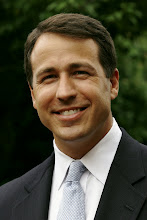
I wanted to take a minute to post a short note letting you know that I’m heading to Afghanistan to serve with Fort Bragg’s 3rd Special Forces Group (Airborne). While I’m not going to be posting blog updates like the deployment to Iraq (different security issues), I did want to share a little about what I’m doing before I go.
From its inception – ten years ago next month – US military involvement in Afghanistan has been based on or incorporated classic unconventional warfare, the expertise of Army Special Forces. As articulated by two Presidents, our end-state is an Afghanistan that denies safe haven to transnational terrorists and that enables its people to determine their own destiny. Our tactics have involved partnerships with internal groups (originally the Northern Alliance, now many more) to carry out our national goals.
While the numbers of US and allied troops have grown significantly over the last three years, at its core, our mission still requires localized, indigenous, “grassroots” partnerships and still falls squarely within the doctrinal expertise of the relatively small number of Special Forces. Stability can only take root “one tribe at a time” and one village at a time; Afghanistan has no history of meaningful, effective central government.
The primary command that carries out the unconventional warfare mission is the Combined Joint Special Operations Task Force-Afghanistan (“CJSOTF-A”). Under CJSOTF-A are the Army Green Beret detachments (called “ODAs”) and Navy SEAL platoons that operate with a mix of other forces and other governmental organizations on the “one village at a time” mission. In their words: CJSOTF-A conducts Foreign Internal Defense by training, working and living among Afghan security forces to build capacity to defeat insurgents in Afghanistan and enhance the security and continued development of the Government. Special Operations Forces (“SOF”) are also involved in empowering elders and their constituents at the local village level to help embolden them to provide security for their areas, as well as to increase development and infrastructure.
What will I be doing in this mix? I’ll serve as the Deputy Command Judge Advocate – one of the two lawyers – for CJSOTF-A and likely be involved in the full spectrum of things that Army Judge Advocates do in combat zones (operations, detention, rule of law, investigations, money as a weapons system, etc.). And, it looks like I may have some involvement with a Task Force directly conducting “Village Stability Operations” in a part of the country. Since last summer, I have spent a lot of time back and forth from Fort Bragg supporting this – and related – missions. I have a high degree of confidence in – and respect for – the people I’ll be working with.
It will be most especially difficult to be away from Elizabeth, Caroline and Will over the next couple of months – and we’re very grateful for the many well-wishes. I already miss them terribly from steamy Fort Benning. But we were pregnant with Caroline on that horrifying September day ten years ago. If I can play some small role in helping make a world safer for her and for Will – and their generation – the time will be worth it. Given the stakes for our country, I am compelled to try.
And I’ll be home again soon.
Wednesday, August 3, 2011
Deploying to Afghanistan


A Little Bit About Afghanistan
I’ve been fascinated to delve into the briefing materials from various sources about Afghanistan and thought I’d share.
Afghanistan is 150th on a list of 154 countries for being least developed on a host of key metrics. The GDP is close to $115 per person, per year (that is not a typo). Foreign aid is the single biggest economic engine. The country has no more than 20 miles of railroad track and 5000 miles of improved road (NC alone has nearly 80,000 miles in state-maintained roads, not including county, local and interstate). Afghanistan has an approximate population of 30 million people – double the population it had in 1980. Forty (40) percent are under the age of sixteen (16). One in five children dies before the age of five (5). The median life expectancy is forty-three (43) years old. (I’ll turn 38 en route).
Afghanistan is made up of many, many ethnic groups and tribes including Pashtuns, Tajiks, Uzbeks, Hazaras and many smaller groups. An artificial line divides Afghanistan from Pakistan (the Durant line drawn in the 1890s). While Afghanistan is run by Pashtuns (approximately 40 percent of the population), twice as many Pashtuns live across the “border” in Pakistan (approximately 12 million in Afghanistan and 27 million in Pakistan). While it is said that the people of Afghanistan identify themselves as citizens of that state, the stronger ties apparently begin at the village, tribe and ethnic group (including across the borders) and extend to the super-national identification with Islam. Yet, even within the tribes, family members are known to take up arms against fellow family members from time to time.
As noted in a very detailed analysis of Afghan Pashtun fighters and their tactics in battles with coalition forces: “they almost never surrender, even in the face of overwhelming odds and almost certain death.” However, if a Pashtun village takes you in as its guest – even an American Soldier – they will extend the same ferocity in your defense, including against other Pashtuns. This seemingly contradictory set of values is known as the Pashtunwali.
In a country that is as under-developed, impoverished, fragmented, decentralized, artificially drawn and culturally remote as Afghanistan, our pathway to strategic success must require alignment of these deeply embedded Pashtunwali values with our own.
Tuesday, August 4, 2009
Short Biography: Cal Cunningham
Cal Cunningham is a Lexington native who last year competed for the Democratic Party nomination for U.S. Senate, coming in second place in a primary run-off. He is an attorney in private practice, specializing in commercial litigation.
During 2008, Cal served as a military prosecutor at the Multi-National Corps-Iraq where he coordinated efforts to hold contractors accountable for serious crimes and fraud. During his tour, he was government counsel on the first court-martial of a contractor under military law since 1968. He was awarded the Bronze Star Medal and the General Douglas MacArthur Leadership Award for his service.
In November 2000, Cal was elected one of North Carolina’s youngest state Senators, representing Davidson, Rowan and Iredell Counties. He served as Vice Chairman of the Senate Judiciary Committee and on the Senate’s education committees. He did not run for re-election after redistricting in 2002. He has since served on the Executive Committee of the North Carolina Democratic Party.
In addition to a Juris Doctor from UNC Law, Cal’s education includes a Masters of Science from the London School of Economics. He also holds a Bachelors degree with Honors from UNC-Chapel Hill. At UNC he served as the Student Body President and later as the Chief Justice of the Student Supreme Court.
He serves as a Governor’s appointee to the Board of Trustees of the Davidson County Community College, and has served as a public member of the North Carolina Banking Commission and as an Elder of the First Presbyterian Church of Lexington.
Cal and his wife Elizabeth have two children – Caroline (9) and Will (8) and a real "Yellow Dog" Democrat, a Golden Retriever named Davidson.
For more information:
Wikipedia: http://en.wikipedia.org/wiki/Cal_Cunningham
Facebook: http://www.facebook.com/cal_cunningham#/